What it is
Before European settlement the ridge held the Māori settlements of Rangipuke and Mangahekea. In the 1840s the colonial government built the Albert Barracks here, one of Auckland's first military fortifications, which housed soldiers through the 1850s and 1860s. The land was set aside as a reserve in the 1870s and developed as a public park in the 1880s.
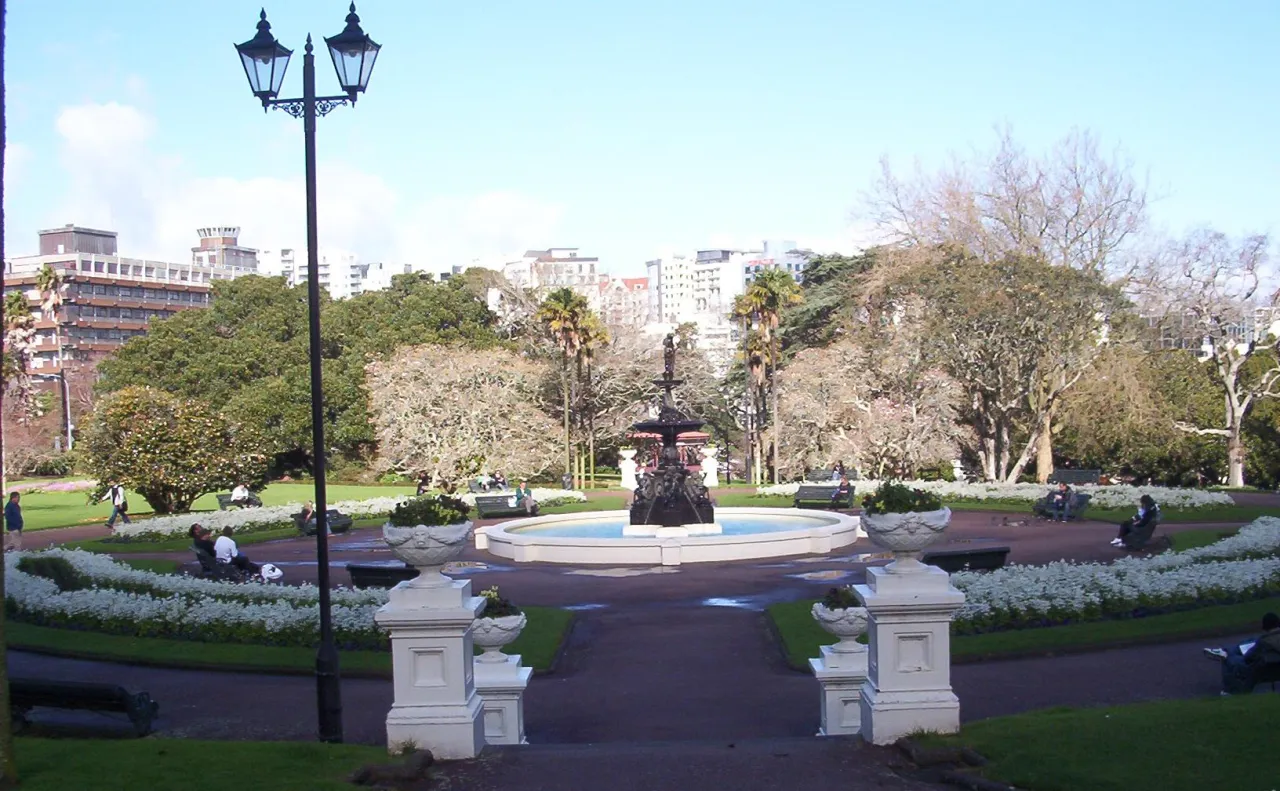
The centrepiece is a cast-iron fountain imported from Britain in 1881, framed by formal flower beds and large old trees. The park also has a bronze statue of Queen Victoria from 1897, a marble statue of Sir George Grey, a bandstand, a Boer War memorial and a floral clock from 1953. Beneath it lie air-raid tunnels dug in 1941 and sealed before the end of the Second World War.
Getting there by bus
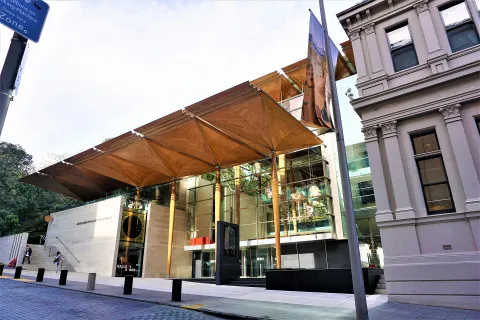
Princes Street (stop 1729), on the park's eastern edge about 120 metres away, is served by routes 931, 933 and 939. On the western side, the Auckland Art Gallery stop (stop 7088) has routes 75, 101 and the Outer Link (OUT), and University General Library (stop 7023) is served by route 101 and OUT.
AUT City Campus (stop 7089) adds routes 25B, 25L and NX2, and the CityLink (CTY) stops at Wellesley Street (stop 7054), about three minutes' walk from the fountain.